FAQ
Frequently asked questions
Clear answers about our services, pricing, and how booking works. If you don't see your question here, ask us when we get in touch.
In short
Pure Airflow Cleaning cleans air ducts, dryer vents, and chimneys for homes in Palm Beach County, Florida. Every job gets its own estimate. To get one, send a request with the service you need, your ZIP code, name, and phone number.
General
What does Pure Airflow Cleaning do?
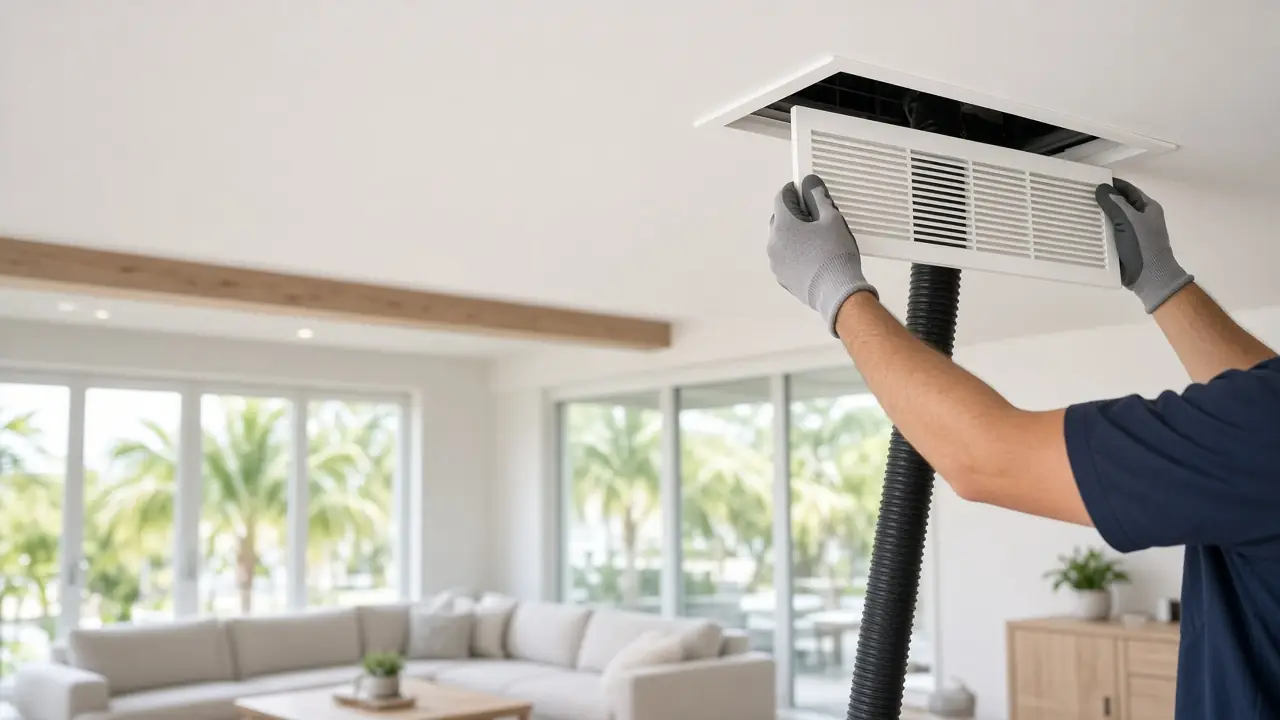
We clean air ducts, dryer vents, and chimneys for homes across Palm Beach County, Florida. Our work helps restore airflow, cut down on household dust, and lower the fire risk from lint and creosote buildup.
Do you work on commercial buildings?
We specialize in residential service, so all of our work is in homes.
Do you serve my area?
If you live in Palm Beach County, most likely yes. We serve homes from Jupiter to Boca Raton, including West Palm Beach, Wellington, Boynton Beach, and Delray Beach. Not sure? Send a request with your ZIP code and we'll confirm.
Air ducts
How do I know if my air ducts need cleaning?
Common signs include dust blowing out of the vents, visible buildup on vent covers, weaker airflow in some rooms, a musty smell when the AC runs, or recent remodeling. If you just moved in or can't remember the last cleaning, it's a smart time to book. Tell us what you're noticing and we'll help you decide.
How often should air ducts be cleaned?
The National Air Duct Cleaners Association (NADCA) suggests a full system cleaning every 4 to 5 years, and more often in homes with pets, allergies, or smokers. In South Florida, where the AC runs almost year-round, dust builds up faster, so many homes benefit from staying on the shorter end of that range.
Will duct cleaning get rid of a musty smell?
Often, yes. When the smell comes from dust and debris built up inside the ducts, cleaning removes the source. In Florida homes, musty odors can also come from moisture, such as a clogged condensate drain line or water near the air handler. We'll help you pinpoint the cause so you get the right fix the first time.
Dryer vents
How often should a dryer vent be cleaned?
At least once a year for most homes. If you have a big household, do a lot of laundry, or notice clothes taking longer to dry, have it cleaned sooner. Cleaning the lint screen after every load helps too.
Why does my dryer vent need cleaning if I empty the lint screen?
The lint screen catches most of the lint, but not all of it. What gets past the screen collects inside the vent line, especially at bends and at the outside vent cover. Over time, that buildup slows drying and becomes a fire hazard.
Chimneys
How often should a chimney be swept?
The National Fire Protection Association (NFPA) recommends a chimney inspection once a year, with sweeping whenever there's buildup. If you use your fireplace often, or it's been a while since the last sweep, book one before your next fire.
What is creosote?
Creosote is a dark, sticky or flaky residue that forms when wood smoke cools and condenses inside the chimney. It's highly flammable, and heavy buildup is a common cause of chimney fires, which is why regular sweeping matters.
Pricing and booking
How much does it cost?
Every home is different, so every job gets its own estimate based on the size of your home and the work involved. You'll know the price before anything is scheduled, with no surprise charges. Send a request and we'll get you a quote.
How do I get an estimate?
Fill out the form on our website with the service you need, your ZIP code, name, and phone number. We'll reach out, ask a few quick questions about your home, and give you a clear price.
What if I'm not sure which service I need?
Choose "Not sure yet" on the form and tell us what you're noticing. We'll recommend the right service for your home.
How long does a cleaning take?
It depends on the size of your home and the work involved. We'll give you an idea of how long to expect when we go over the estimate.